On this page
BPC-157 vs TB-500: How Two Tissue-Repair Peptides Differ
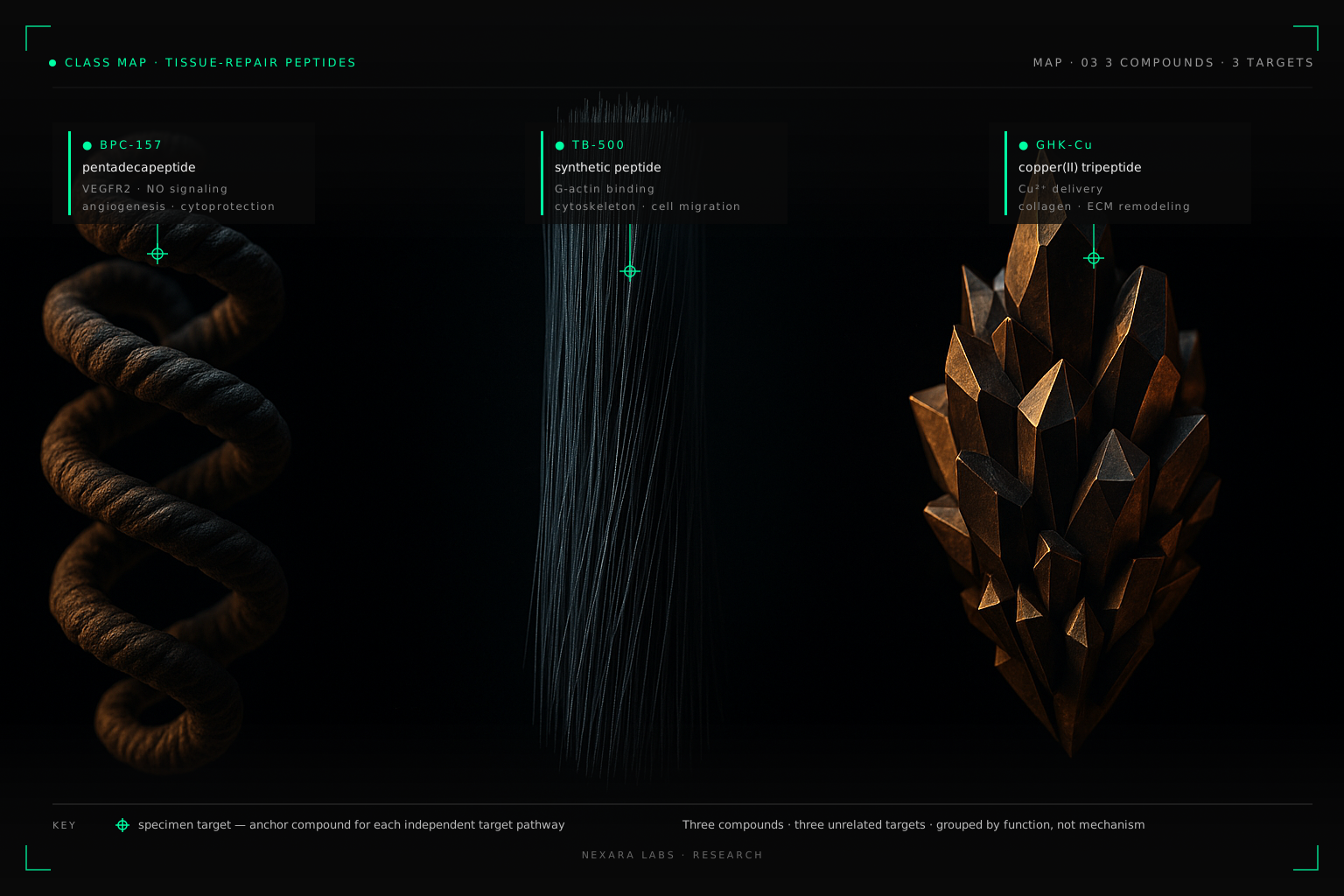
These two peptides are almost always discussed in the same breath, which creates the impression that they are competing options for the same job. In the research literature they are not. They belong to the same functional class, compounds studied in tissue-repair models, but they act through separate molecular mechanisms. This comparison sets out what each one is, what target it engages, and where the two genuinely differ.
Both sit inside the broader tissue-repair peptide class, which the parent cornerstone maps in full. The short version is that one is a gastric-juice-derived peptide studied for protective signaling, and the other a fragment of an actin-regulating protein studied for cell movement.
Do BPC-157 and TB-500 do the same thing?#
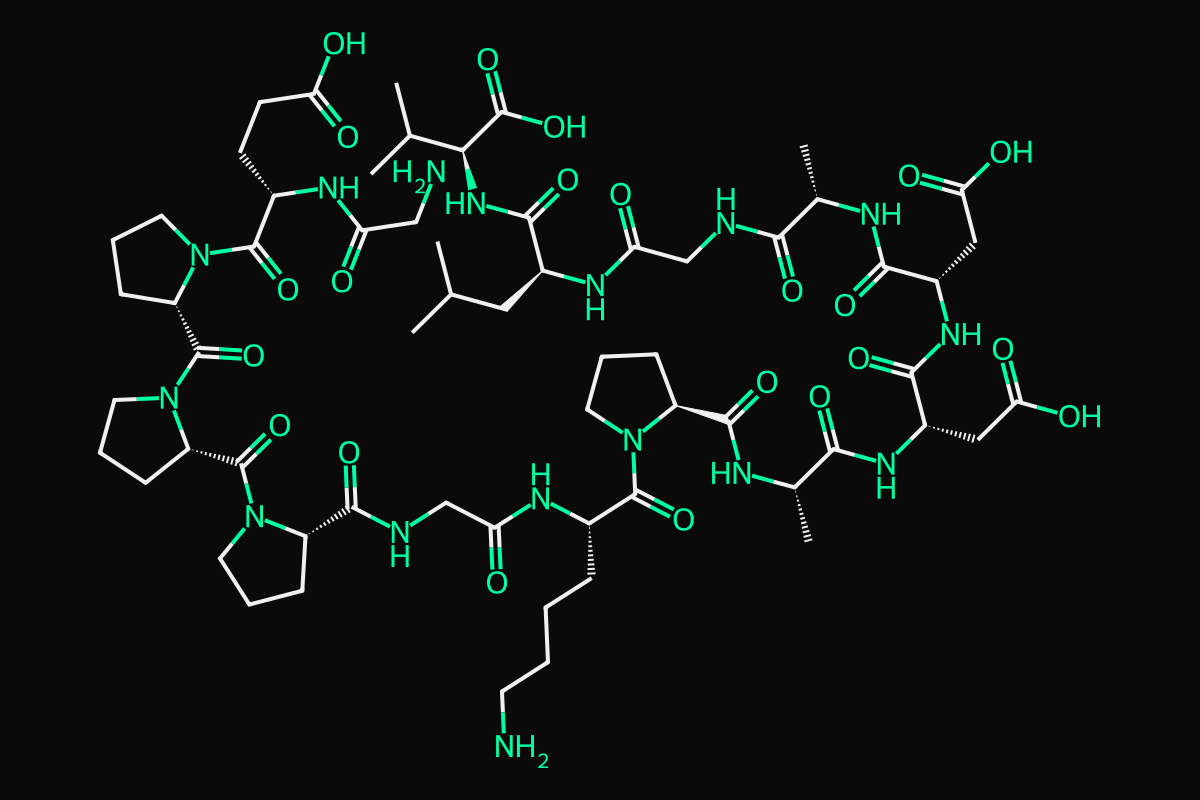
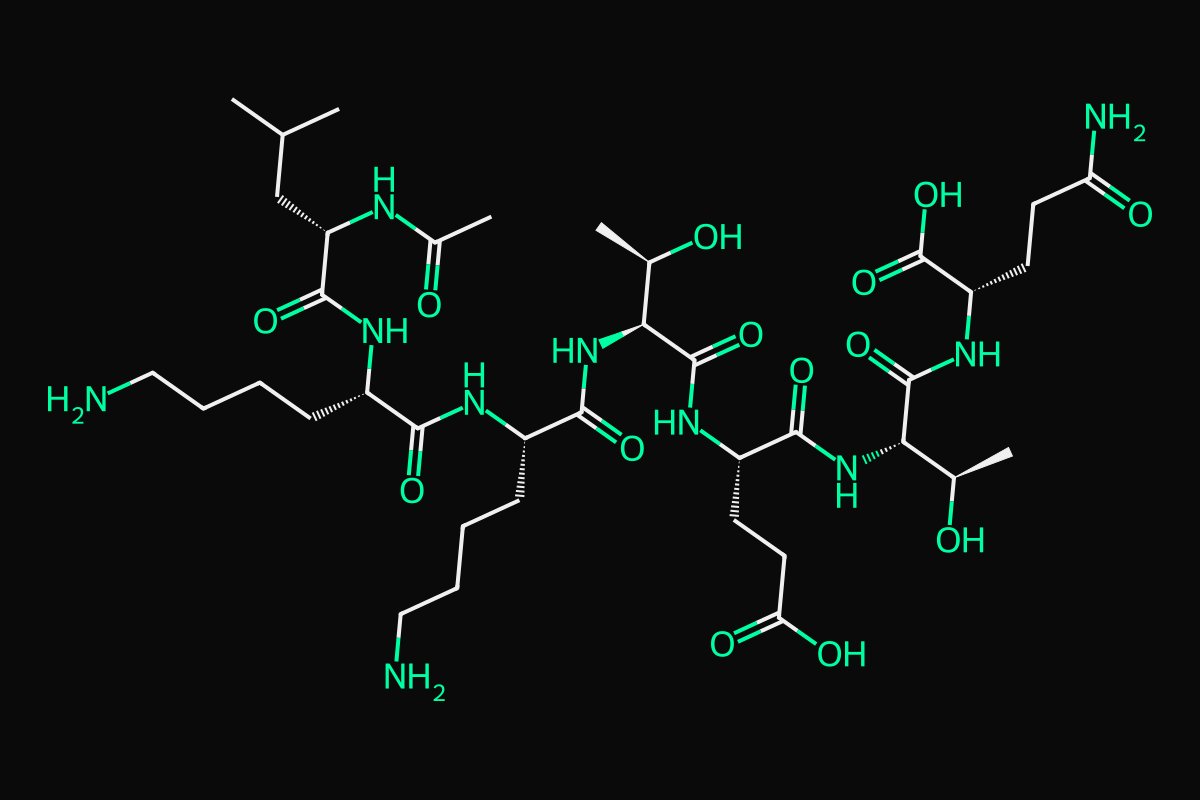
No. They are studied for overlapping research areas (wound-repair and angiogenesis models) but through different mechanisms. BPC-157 is a 15-amino-acid peptide whose preclinical record centers on cytoprotection and angiogenic signaling. TB-500 is a synthetic fragment of thymosin β4, the principal actin-sequestering protein, and its literature centers on cytoskeletal dynamics and cell migration. Treating "same research area" as "same mechanism" is the most common error in discussions of this pair.
| Attribute | BPC-157 | TB-500 |
|---|---|---|
| Origin | Fragment of a protein in gastric juice; characterized 1993 | Synthetic fragment of thymosin β4 (UniProt P62328) |
| Size | 15 amino acids (pentadecapeptide) | Short actin-binding fragment of a 43-residue protein |
| Reported target | VEGFR2 / angiogenic signaling; nitric-oxide system | G-actin sequestration; actin-cytoskeleton dynamics |
| Primary study area | Cytoprotection; tendon, ligament, gut, vascular models | Cell migration; angiogenesis; wound-closure models |
| Mechanistic role | Protective / signaling | Structural / cytoskeletal |
BPC-157
TB-500
What is BPC-157 studied for?#
BPC-157 is a stable pentadecapeptide derived from a protein in gastric juice. Most of its preclinical literature, much of it from a single group at the University of Zagreb, examines cytoprotection and angiogenic signaling, with reported activity at the VEGFR2 receptor and the nitric-oxide pathway, across tendon, ligament, gut, and vascular models. Its full identity is covered in the BPC-157 compound profile, and the research compound is BPC-157 (10mg).
What is TB-500 studied for?#
TB-500 is based on the actin-binding region of thymosin β4, the principal G-actin–sequestering protein in many cell types. By regulating the monomeric-actin pool, thymosin β4 influences the cytoskeletal remodeling that underlies cell migration, so the TB-500 literature centers on migration, angiogenesis, and wound-closure models rather than the protective signaling associated with BPC-157. See the TB-500 compound profile for detail; the compound is TB-500 (10mg).
Why are they studied together?#
Because the mechanisms do not overlap, the preclinical literature frequently examines them in combination: one peptide protecting and signaling, the other supporting the cytoskeletal machinery of cell movement. This is the rationale behind multi-peptide research blends such as the Wolverine blend, which pairs the two. Co-administration in a research setting is studied for mechanistic coverage across the two pathways, not for any additive-benefit claim.
Frequently asked
- Are BPC-157 and TB-500 the same thing?
- No. They share a research class, since both appear in tissue-repair and angiogenesis models, but they act through unrelated mechanisms. BPC-157 is a 15-amino-acid gastric-juice-derived peptide studied for cytoprotective and angiogenic signaling. TB-500 is a synthetic fragment of thymosin β4 studied for actin-cytoskeleton regulation and cell migration. They are not interchangeable.
- What is the main difference between BPC-157 and TB-500?
- The targets. BPC-157 is studied for signaling activity (VEGFR2, the nitric-oxide system) that protects tissue, while TB-500 is studied for structural activity, regulating the monomeric-actin pool that drives cell migration. One is a protective/signaling peptide in the research literature, the other a cytoskeletal one.
- Why do researchers study BPC-157 and TB-500 together?
- Because their mechanisms do not overlap, the preclinical literature often examines them in combination to cover both the angiogenic/protective pathway and the cytoskeletal/migration pathway. Multi-peptide research blends that pair the two exist for this reason. Combined study is about mechanistic breadth, not an additive-benefit claim.
Sources and further reading#
- Sikiric et al., Stable Gastric Pentadecapeptide BPC 157 — cytoprotection/organoprotection review (PMC7096228): the foundational review of the BPC-157 preclinical record.
- Structural basis of thymosin-β4/profilin exchange in actin polymerization, PNAS (PMC4217450): how thymosin β4, the parent of TB-500, sequesters G-actin.
- Thymosin beta-4, UniProt P62328: canonical sequence and annotation for the parent protein of TB-500.
Continue your research