On this page
Melanocortin-System Peptides: A Research Overview
The melanocortin system is one of the more elegant receptor families in pharmacology: five related receptors, each tied to a different physiological pathway, all responsive to melanocortin peptides. This overview maps the receptor family, introduces the two research peptides in this class by the receptors they prefer, and points to the dedicated receptor map for the full detail. Everything here is receptor-signaling research context.
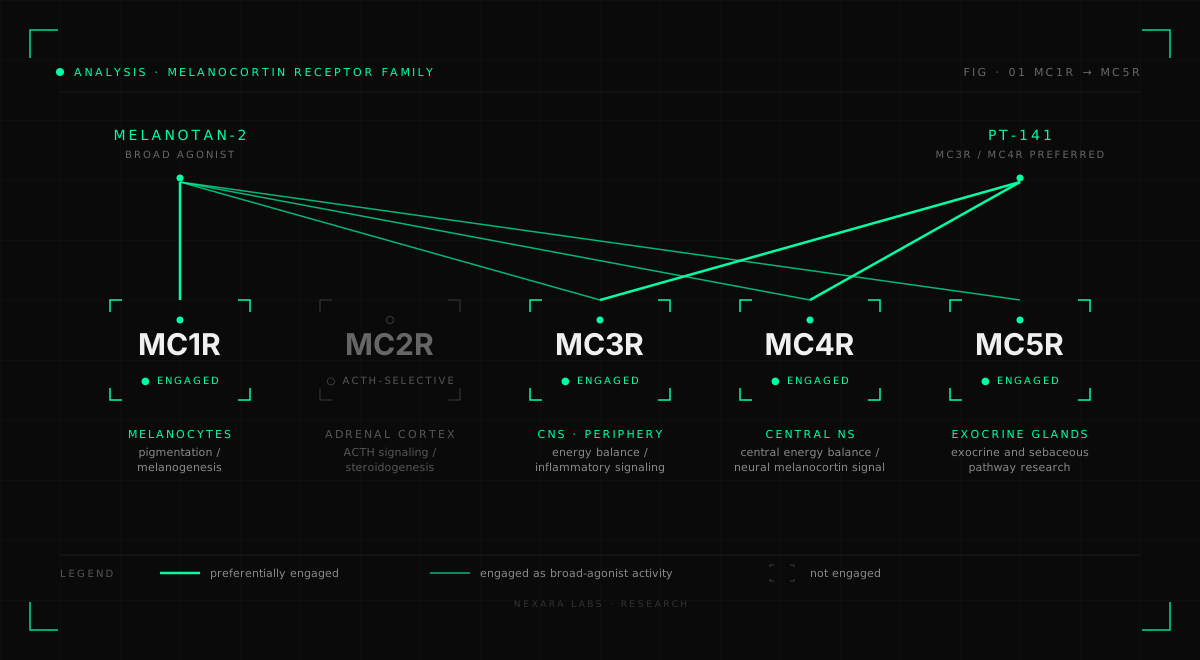
Two compounds anchor the class: Melanotan-2, a synthetic analog of α-melanocyte-stimulating hormone that acts broadly across the melanocortin receptors, and PT-141, a related peptide that preferentially engages the MC3R and MC4R subtypes. Their structural relationship and receptor preferences are what the research literature works with.
What are melanocortin peptides?#
Melanocortin peptides are agonists of the melanocortin receptors, a family derived from the same precursor biology as the natural melanocortins (α-MSH and related hormones). In research they are studied as tools for probing which receptor subtype drives which pathway, since the five receptors are distributed across different tissues and signaling roles. The peptides in this class are synthetic analogs designed for stability and, in PT-141's case, receptor preference.
Which peptides make up the class?#
The table summarizes the two anchor compounds by receptor preference and the research area associated with the receptors they engage. The full receptor family is mapped in the companion explainer.
| Compound | Receptor preference | Associated research area |
|---|---|---|
| Melanotan-2 (MT2) | Broad melanocortin agonist (incl. MC1R) | MC1R signaling and melanogenesis-pathway research |
| PT-141 | Prefers MC3R and MC4R | Central melanocortin (MC3R/MC4R) signaling research |

Melanotan-2 (MT2)#
Melanotan-2 is a synthetic cyclic analog of α-melanocyte-stimulating hormone that acts as a broad agonist across the melanocortin receptors, with notable activity at MC1R. The literature studies it in MC1R-signaling and melanogenesis-pathway research. Detail is in the Melanotan-2 compound profile.
PT-141#
PT-141 is structurally related to Melanotan-2 but preferentially engages the MC3R and MC4R subtypes, the melanocortin receptors concentrated in the central nervous system. That receptor shift is what distinguishes it within the class. Detail is in the PT-141 compound profile.
The melanocortin receptor family#
The melanocortin system has five receptors (MC1R through MC5R), each tied to a different pathway, from pigmentation biology to central signaling to adrenal function. Which receptor a peptide prefers determines which pathway it is useful for studying. The full map of the five receptors and which compounds engage them is in the melanocortin receptors explained.
How are melanocortin peptides handled in the lab?#
Both compounds ship lyophilized and are reconstituted before use. They are cyclic peptides with good stability, but storage practice matches the rest of the catalog: the reconstitution primer covers solvent choice, and the cold-chain article covers stability once reconstituted. Purity context is in what ≥99% purity means. The neuropeptide class covers an adjacent CNS-active small-peptide research neighborhood and follows the same handling protocols.
How Nexara handles this class#
Each peptide in this class is specified at ≥99% purity and labeled with a batch identifier for shipment traceability. Independent third-party COA delivery is currently paused while the testing program transitions to a new laboratory partner; the research compliance page documents the current posture. All compounds are sold strictly for laboratory research use.
Frequently asked
- What are melanocortin peptides?
- They are agonists of the melanocortin receptor family (MC1R–MC5R), a group of five G-protein-coupled receptors. In research they are studied as tools for probing which receptor subtype drives which signaling pathway. The two in this class are Melanotan-2, a broad melanocortin agonist, and PT-141, which prefers the MC3R and MC4R subtypes. They are research compounds, not for human use.
- What is the difference between Melanotan-2 and PT-141?
- Receptor preference. Melanotan-2 is a broad melanocortin agonist with notable MC1R activity, studied in MC1R-signaling and melanogenesis-pathway research. PT-141 is structurally related but preferentially engages the MC3R and MC4R subtypes concentrated in the central nervous system. The receptor each one favors is the defining distinction.
- How many melanocortin receptors are there?
- Five: MC1R through MC5R. Each is tied to a different pathway, from pigmentation biology (MC1R) to central signaling (MC3R/MC4R) to adrenal function (MC2R). Which receptor a peptide prefers determines which pathway it is useful for studying. The companion receptor map covers all five.
Sources and further reading#
- Hadley & Dorr, Melanotan-II — melanocortin agonist discovery and pharmacology, Peptides 2006 (PMID 16426078): review of the synthetic melanocortin-agonist class (the melanotan / bremelanotide lineage).
- MC1R and melanin synthesis in humans with MC1R variants (PMID 16293341): study of the MC1R pigmentation pathway engaged by the broad melanocortin agonists.
Last updated: 2026-05-31
Continue your research
- Deep dive
The Melanocortin Receptors Explained: MC1R Through MC5R
A research map of the five melanocortin receptors (MC1R–MC5R): the pathway each is tied to, and which melanocortin peptides preferentially engage which subtype.
- Next foundational
Metabolic, Incretin & Amylin Peptides: A Research Overview
How the metabolic peptide class is studied: incretin triple agonists (GLP-3), amylin analogs (Cagrilintide), and growth-hormone fragments (AOD9604), their receptor targets and research areas.