On this page
The Melanocortin Receptors Explained: MC1R Through MC5R
Melanocortin pharmacology only makes sense once the five receptors are separated out. Each is encoded by a different gene, sits in different tissues, and drives a different pathway, yet all respond to melanocortin peptides. This explainer maps the five receptors, then shows which research peptides preferentially engage which subtype. It sits within the melanocortin peptides class.
What is the melanocortin system?#
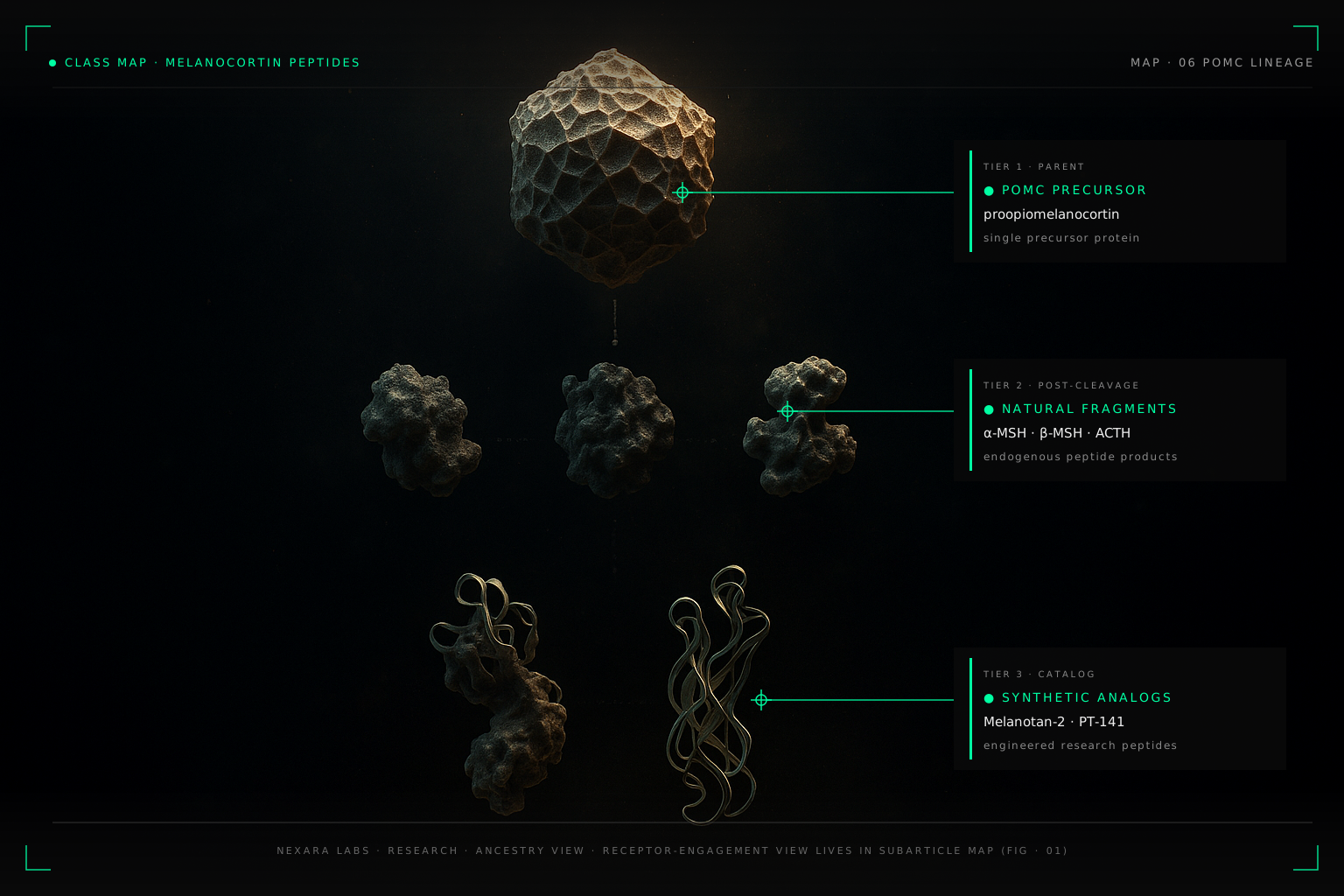
The melanocortin system is built from peptides derived from the precursor protein proopiomelanocortin (POMC), including the melanocyte-stimulating hormones and ACTH, acting on a family of five receptors. The receptors are numbered MC1R through MC5R in the order they were identified. Synthetic melanocortin peptides are studied as research tools precisely because they let investigators probe one receptor pathway at a time.
The five receptors#
The table maps each receptor to its primary tissue distribution and the pathway the literature associates with it. The roles describe receptor-signaling research, not outcomes in people.
| Receptor | Primary distribution | Associated research pathway |
|---|---|---|
| MC1R | Melanocytes | Pigmentation biology and melanogenesis-pathway signaling |
| MC2R | Adrenal cortex | ACTH response and steroidogenesis |
| MC3R | Central nervous system, periphery | Energy-balance and inflammatory-signaling research |
| MC4R | Central nervous system | Central energy-balance and neural melanocortin signaling |
| MC5R | Exocrine glands | Exocrine-gland and sebaceous-pathway research |
Which peptides target which receptors?#
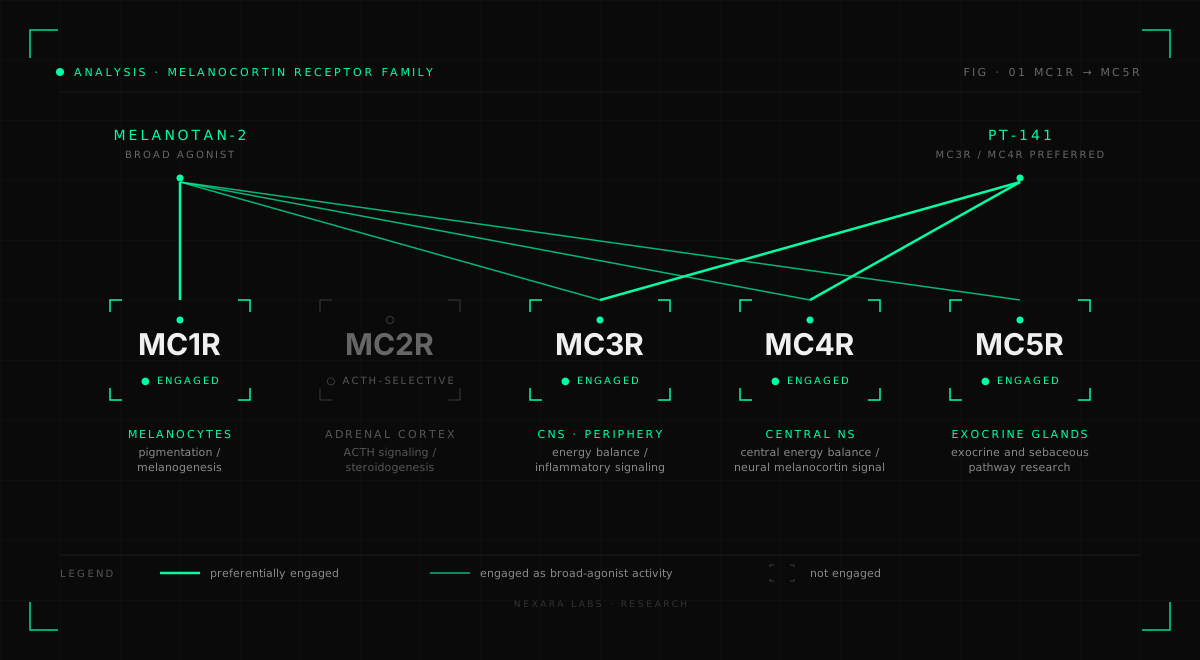
The two research peptides in this class differ by receptor breadth. Melanotan-2 is a broad melanocortin agonist with notable MC1R activity, which is why it appears in MC1R-signaling and melanogenesis-pathway research. PT-141 is structurally related but shifts its preference toward MC3R and MC4R, the central-nervous-system subtypes, which is why it is studied in central melanocortin-signaling research instead. The receptor preference is the whole story of how the two are used.
Frequently asked
- How many melanocortin receptors are there?
- Five: MC1R through MC5R. Each is a G-protein-coupled receptor encoded by a different gene, distributed in different tissues, and tied to a different signaling pathway, from pigmentation biology (MC1R) to adrenal steroidogenesis (MC2R) to central signaling (MC3R/MC4R) to exocrine-gland research (MC5R).
- What is the difference between MC1R and MC4R?
- MC1R sits on melanocytes and is studied in pigmentation and melanogenesis-pathway signaling. MC4R sits in the central nervous system and is studied in central energy-balance and neural melanocortin signaling. They are different receptors on different tissues, which is why peptides that prefer one versus the other are used to study different pathways.
- Which receptors does PT-141 target?
- PT-141 preferentially engages the MC3R and MC4R subtypes, the melanocortin receptors concentrated in the central nervous system. This distinguishes it from Melanotan-2, which is a broader melanocortin agonist with notable MC1R activity. The shift in receptor preference is the defining difference between the two.
Sources and further reading#
- Hadley & Dorr, melanocortin agonists across the receptor subtypes, Peptides 2006 (PMID 16426078): review covering melanocortin-receptor agonist pharmacology.
- MC1R and melanin synthesis in humans (PMID 16293341): study of the MC1R pigmentation pathway.
Continue your research