On this page
Semax vs Selank: How Two Nootropic Neuropeptides Differ
These two are the most-paired peptides in nootropic research, which makes their differences easy to blur. They look alike on paper: similar length, the same stabilizing modification, the same research neighborhood. The substance is in the pathways. This comparison sets out what each comes from, what it engages, and why the literature so often studies the two side by side.
Both belong to the neuropeptide class, which the parent cornerstone maps in full. The decisive distinction is the pathway each one acts on.
Do Semax and Selank work the same way?#
No. Semax is an analog of an ACTH fragment and is studied as a neurotrophic and neuroprotective agent, with reported effects on brain-derived neurotrophic factor (BDNF). Selank is an analog of tuftsin and is studied for GABAergic and regulatory signaling. They share an engineering template (the Pro-Gly-Pro extension that stabilizes both), but the pathways do not overlap, which is exactly why combining them is studied as complementary.
| Attribute | Semax | Selank |
|---|---|---|
| Natural parent | ACTH(4-10) fragment | Tuftsin (immunomodulatory peptide) |
| Stabilizing feature | C-terminal Pro-Gly-Pro | C-terminal Pro-Gly-Pro |
| Reported pathway | Neurotrophic signaling; BDNF expression | GABAergic and regulatory signaling |
| Primary study area | Neuroprotection, neurotrophic research | Anxiolytic-pathway, regulatory research |
| Research role | Neurotrophic / pro-cognitive pathway tool | Regulatory / anxiolytic pathway tool |
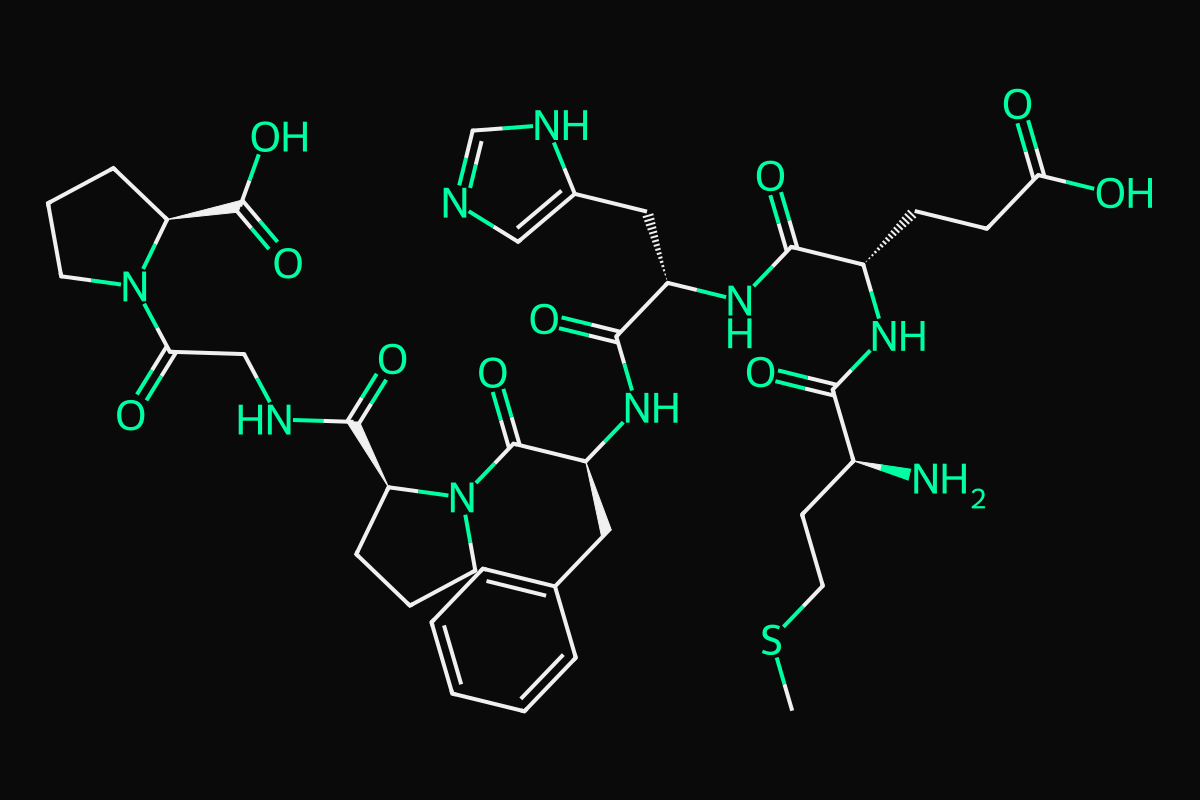
Semax
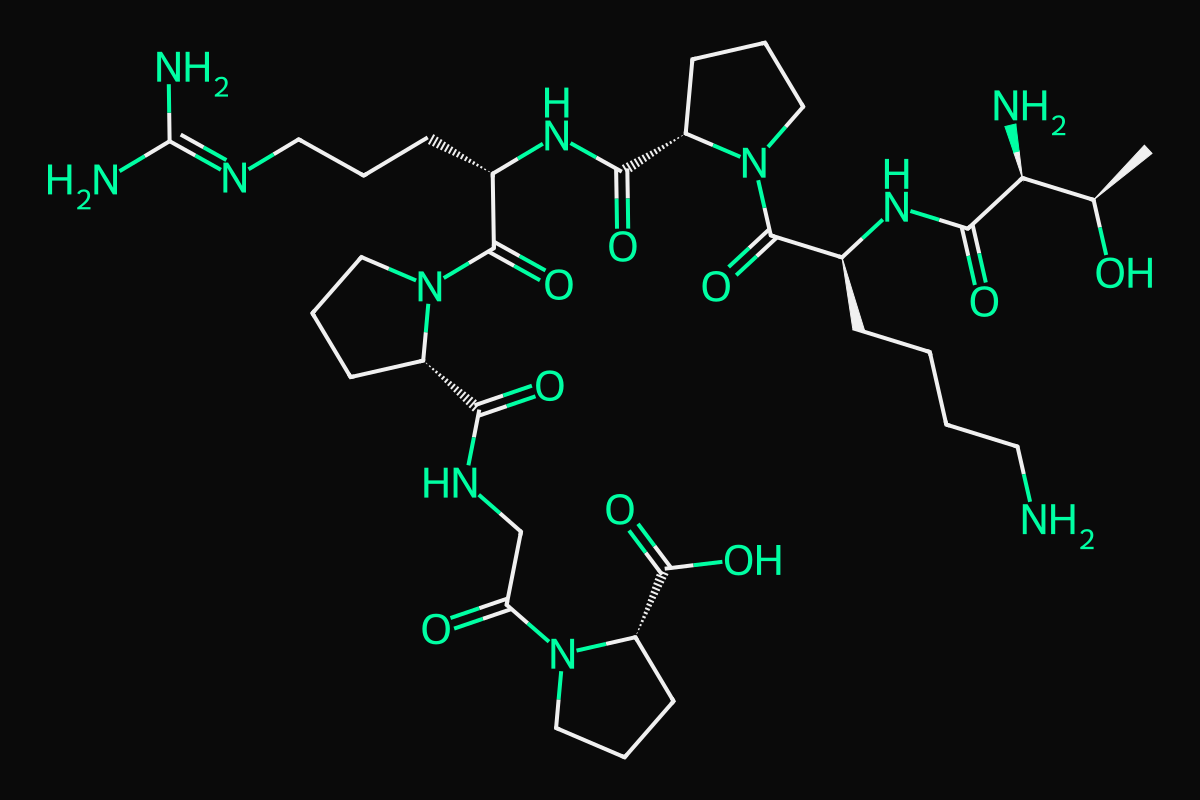
Selank
What is Semax studied for?#
Semax is a synthetic analog of the ACTH(4-10) fragment, stabilized with a Pro-Gly-Pro extension and stripped of the parent's hormonal activity. The literature studies it as a neurotrophic and neuroprotective agent, with the most-cited reported mechanism being upregulation of BDNF expression. Its identity is detailed in the Semax profile; the research compound is Semax (10mg).
What is Selank studied for?#
Selank is a synthetic analog of tuftsin, a naturally occurring immunomodulatory peptide, also extended with Pro-Gly-Pro. Its research centers on GABAergic and regulatory signaling, the basis for its study in anxiolytic-pathway research, distinct from the neurotrophic emphasis of Semax. See the Selank profile for detail; the compound is Selank (10mg).
Why are they studied together?#
Because the two engage different pathways, the literature frequently examines them as a pair: one neurotrophic, one regulatory. The pairing is studied for that complementarity of mechanism, not for any combined human outcome. As across the class, this is pathway pharmacology and preclinical research only.
Frequently asked
- Are Semax and Selank the same?
- No. They share a design template, both are Pro-Gly-Pro-stabilized heptapeptide analogs, but they come from different parent peptides and engage different pathways. Semax (from an ACTH fragment) is studied for neurotrophic/BDNF activity; Selank (from tuftsin) is studied for GABAergic signaling. They are complementary research tools, not interchangeable.
- What is the main difference between Semax and Selank?
- The pathway. Semax leans neurotrophic, with reported effects on BDNF expression and neuroprotection. Selank leans regulatory, acting on GABAergic signaling. Both are short stabilized peptides, but they act on different neurochemical systems, which is the defining distinction.
- Why are Semax and Selank often studied together?
- Because their pathways are complementary rather than overlapping, one neurotrophic and one regulatory, the literature often examines them as a pair to cover both signaling systems. Combined study is about mechanistic breadth, not a stated human benefit.
Sources and further reading#
- Semax (ACTH 4-10 analog) increases BDNF in rat basal forebrain (PMID 16635254): primary study of the Semax neurotrophic mechanism.
- Selank — anxiolytic neuropeptide literature, PubMed: primary literature on the Selank neuropeptide.
Continue your research