On this page
CJC-1295 vs Ipamorelin: How Two GH Secretagogues Differ
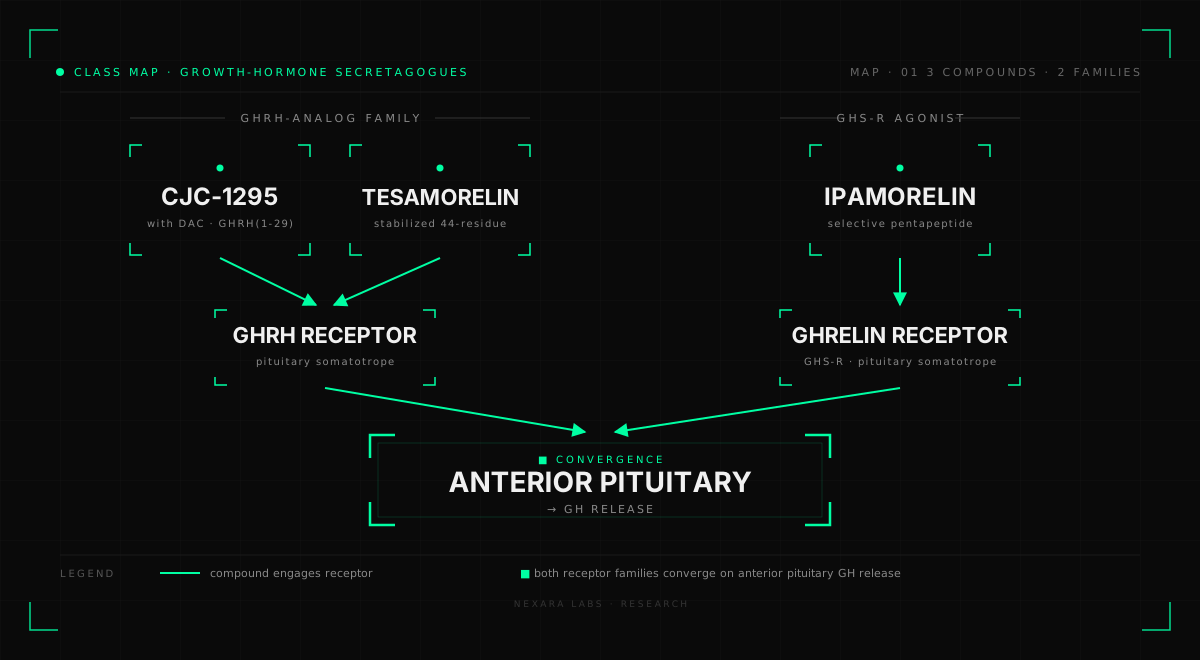
This is the canonical pairing in the growth-hormone secretagogue class, and the reason it is so common is also the reason the two are easy to confuse. They share an endpoint, more GH signaling, but reach it through separate receptors. This comparison sets out the receptor difference, the resulting release kinetics, and why the literature so often examines the two together.
Both belong to the growth-hormone secretagogue class, which the parent cornerstone maps in full. The decisive distinction is the receptor each one binds.
Do CJC-1295 and Ipamorelin work the same way?#
No. CJC-1295 is an analog of growth-hormone-releasing hormone (GHRH) and binds the GHRH receptor, while Ipamorelin is an agonist of the separate ghrelin / growth-hormone-secretagogue receptor (GHS-R). Both pathways converge on pituitary GH release, but they are distinct signals, which is exactly why combining them is studied for an amplified effect rather than a redundant one.
| Attribute | CJC-1295 (DAC) | Ipamorelin |
|---|---|---|
| Mechanism family | GHRH analog | Ghrelin-receptor agonist |
| Receptor target | GHRH receptor | GHS-R (ghrelin receptor) |
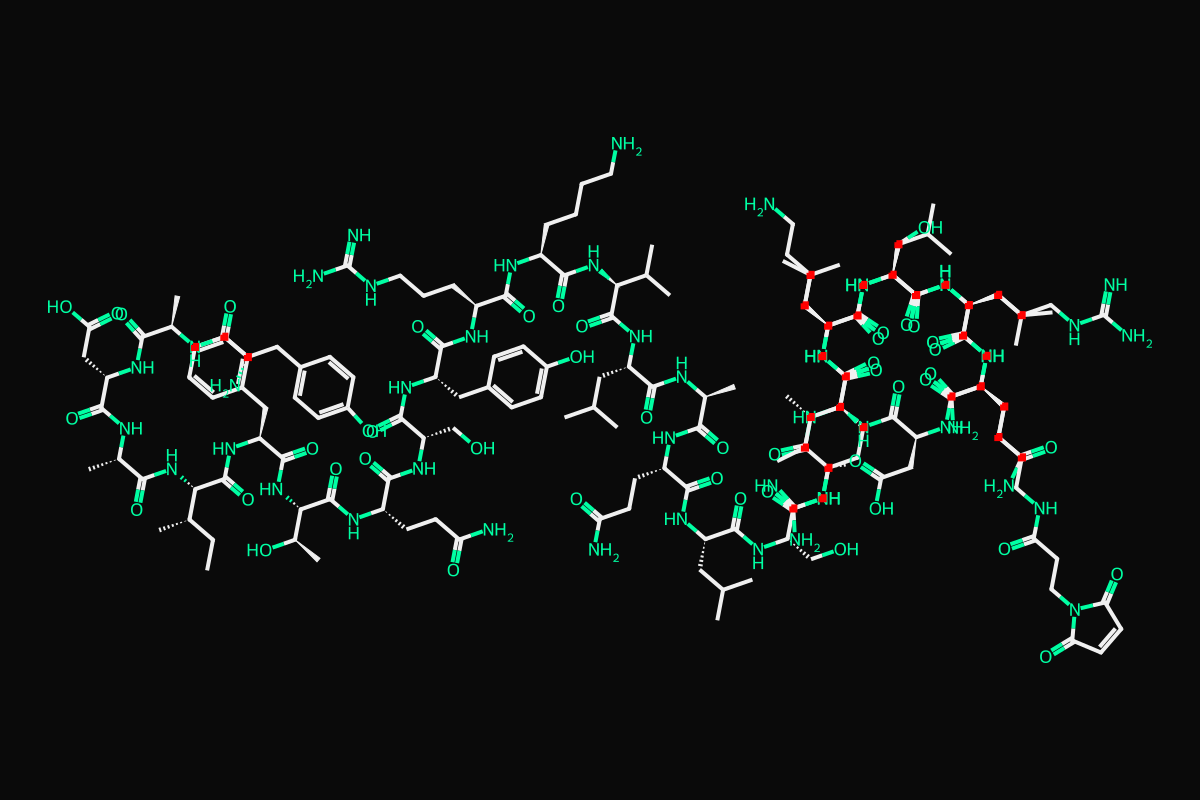
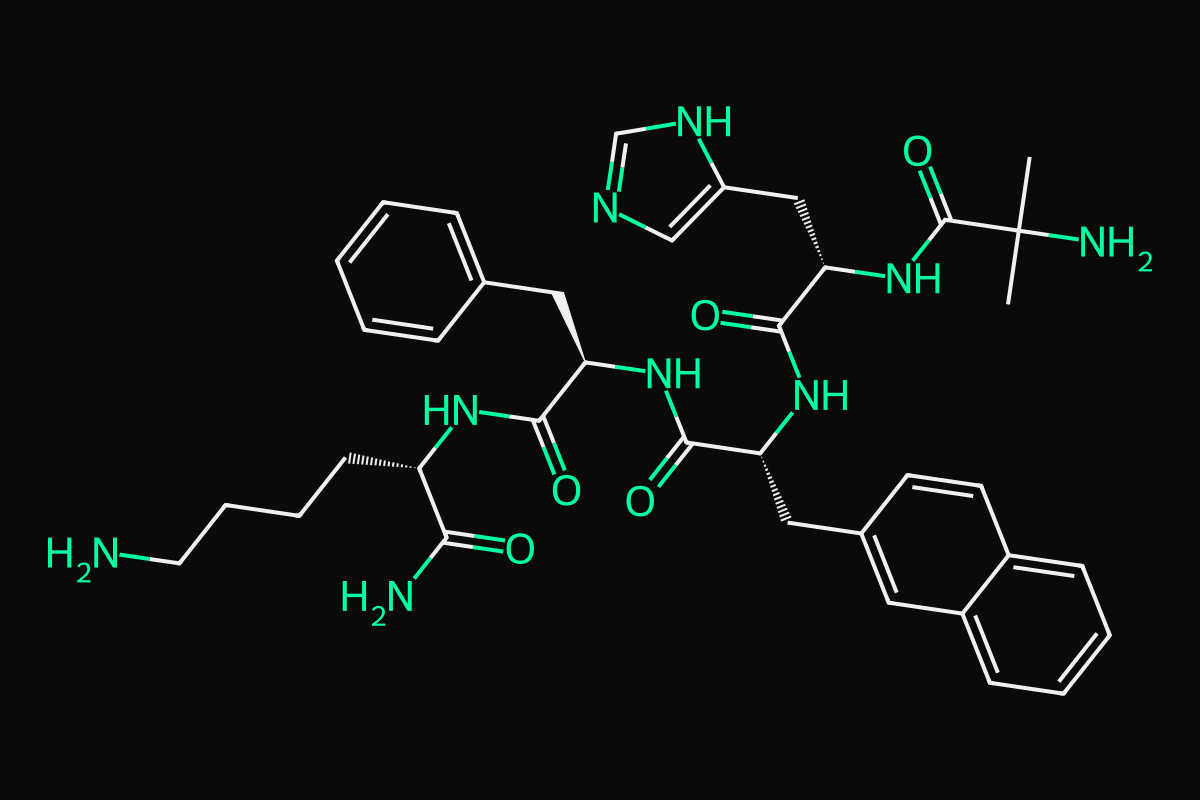
| Structure | Modified GHRH(1-29), 4 substitutions + DAC | Selective pentapeptide (Aib-His-D-2-Nal-D-Phe-Lys) |
| Reported half-life | Days (albumin-binding DAC; ~6–8 days reported) | Short (pulse-like release) |
| Release pattern studied | Sustained, elevated baseline signaling | Pulsatile, closer to natural GH rhythm |
CJC-1295 (DAC)
Ipamorelin
What is CJC-1295 studied for?#
CJC-1295 is a synthetic GHRH(1-29) analog with four substitutions for protease resistance and a Drug Affinity Complex (DAC) that binds serum albumin, extending its persistence from minutes to a reported 6–8 days. The literature studies it for sustained GHRH-receptor signaling over that extended window. Identity detail is in the CJC-1295 (DAC) profile, and the research compound is CJC-1295 (DAC) (5mg).
What is Ipamorelin studied for?#
Ipamorelin is a highly selective pentapeptide agonist of the ghrelin / GHS receptor, characterized as one of the first selective growth-hormone secretagogues. Because it acts on the GHS-R, the release it is studied for is shorter and more pulse-like than the sustained GHRH-analog pattern. Detail is in the Ipamorelin profile, and the research compound is Ipamorelin (5mg).
Why are they studied as a pair?#
Because the two act on different receptors, the literature reports that combining a GHRH analog with a ghrelin-receptor agonist amplifies GH release beyond either alone, with the GHRH signal raising the baseline while the GHS-R signal adds a pulse. This receptor complementarity is the basis for studying the CJC-1295 plus Ipamorelin pairing. As across the class, combined study is about mechanism, not a human-outcome claim.
Frequently asked
- Are CJC-1295 and Ipamorelin the same?
- No. They act on different receptors: CJC-1295 is a GHRH analog (GHRH receptor) and Ipamorelin is a ghrelin-receptor (GHS-R) agonist. Both increase growth-hormone signaling but through separate pathways, which makes them complementary research tools rather than interchangeable ones.
- Why are CJC-1295 and Ipamorelin often combined in research?
- Because they engage two distinct receptors. The literature reports that pairing a GHRH analog with a ghrelin-receptor agonist amplifies GH release beyond either compound alone, with one raising baseline signaling and the other adding a pulse. The pairing is studied for that mechanistic complementarity, not for any stated human benefit.
- What does the DAC in CJC-1295 do?
- The Drug Affinity Complex (DAC) is a maleimido-lysine group that binds covalently to serum albumin after administration. It extends the compound's persistence from minutes, for unmodified GHRH peptides, to a reported 6–8 days, which is why CJC-1295 with DAC is studied for sustained signaling rather than short pulses.
Sources and further reading#
- Teichman et al., Prolonged GH/IGF-I secretion by CJC-1295, J Clin Endocrinol Metab 2006 (PMID 16352683): foundational pharmacology study of the long-acting GHRH analog CJC-1295.
- Raun et al., Ipamorelin, the first selective growth hormone secretagogue, Eur J Endocrinol 1998 (PMID 9849822): primary characterization of ipamorelin and the GHS-R mechanism.
Continue your research